Commercial SDK evaluation for learner-controlled session context.
SlowSystems is a structured learning platform first. In phase 1, an adult learner may optionally connect a supported Muse device to add technical session context without affecting grades, learning outcomes, or teacher feedback.
Product definition AvailableLearning workflow DefinedTechnical fixture AvailableLive-device runtime Not demonstrated
Application context
Structured learning software with an optional Muse signal source.
The platform does not depend on EEG and does not reproduce proprietary meditation, focus, sleep, recovery, or mental-fitness scores. Device data is not used to grade learners, infer understanding, or evaluate teachers.
Product workflow prototype
The non-device learning workflow is now clickable.
The prototype demonstrates a coach-created learning plan, an adult learner session, a knowledge check, reflection, coach feedback, and repetition planning. It uses sample educational data only and contains no live Muse SDK integration or EEG data.
Interactive product prototypeSample educational data · No live Muse SDK integration · No EEG data
Implemented product workflow and pending Muse evidence are separated.
The table distinguishes a real clickable sample-data prototype from functions that require approved SDK access and supported-device confirmation.
Area
Status
Evidence or boundary
Coach–learner workflow
Interactive prototype
Clickable sample-data workflow at /demo
Learning plans
Prototype
Goal, material, task, duration, knowledge check, due date, and review date
Guided sessions
Prototype
Tasks, notes, pauses, completion, and learner reflection
Knowledge checks
Prototype
Sample educational result; no device-derived grading
Coach feedback
Prototype
Feedback, next task, and repetition date
Muse SDK access
Pending
Commercial review requested
Live Muse connection
Not implemented
No Bluetooth or live-device runtime is shown
Muse S Athena compatibility
Not confirmed
Standard Android capability confirmation requested
EEG processing
Not demonstrated
No simulated EEG stream, chart, or mental-state score
Athena optics / fNIRS
Optional later question
Not required for phase 1
Why Muse is requested
Muse would add optional technical context to an already defined learning workflow.
The request is limited to connection handling, timestamps, signal-quality guidance, repeatable development support, and permitted local feature processing. The device does not create the learning result.
Session synchronization
Permitted timestamps can align optional device context with task changes, pauses, and manual markers.
Connection quality
Connection status and available signal-quality information can help the learner identify unusable periods.
Repeatable development
.muse recording, logging, and playback would support reproducible integration testing where permitted.
Local learner context
Approved data can be processed locally before a narrowly defined session feature event shown only to the learner.
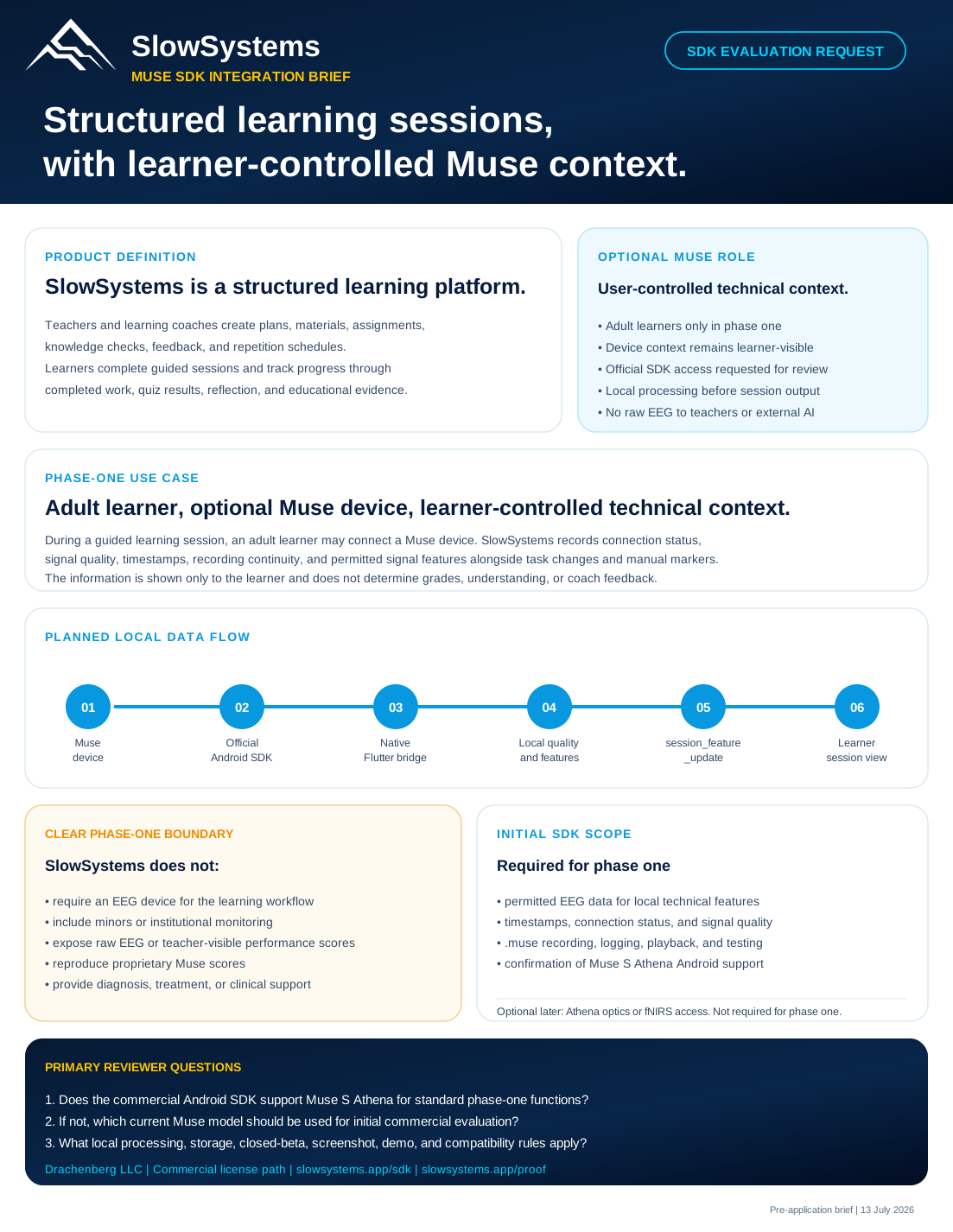
Reviewer one-page brief
The complete application scope on one page.
The PDF brief summarizes the learning product, adult phase-one users, session workflow, optional Muse integration, product boundaries, initial SDK request, and current evidence status. The SVG remains available as the responsive web preview.
Pre-application Muse SDK integration brief. Commercial SDK access and live-device support remain subject to Muse review.
Reviewer facts
Concrete application scope for commercial SDK review.
The planned implementation uses Android / Flutter with a native bridge and begins with internal testing followed by an adult closed beta only after SDK and licensing approval.
Applicant
Drachenberg LLC
Project stage
Pre-revenue commercial prototype
License path
Commercial
Initial platform
Android / Flutter with a native SDK bridge (planned)
Primary evaluation target
Muse S Athena
Initial users
Adult independent learners and adult learners working with a learning coach
Device-data visibility
Learner only in phase 1
Initial distribution
Internal testing first; adult closed beta only after SDK and licensing approval
During a guided learning session, an adult learner may optionally connect a Muse device. The application records connection status, signal quality, timestamps, recording continuity, and permitted signal features alongside task changes, pauses, and manual markers. The information is shown only to the learner as technical session context. It does not grade the learner, infer understanding, or determine teacher feedback.
Planned data flow
Local processing before a learner-controlled session event.
The phase-one design keeps device access, local processing, educational records, and any future storage as separate layers.
01
Muse device
02
Official Android SDK
03
Native Flutter bridge
04
Local signal-quality and feature processing
05
session_feature_update
06
Learner-controlled session view
Raw EEG upload
Disabled by default.
Teacher or coach access
Educational records only; no raw EEG or EEG-derived performance scores.
Third-party AI access
No raw EEG.
Persistent device storage
User-controlled and separately documented before any closed beta.
Requested capability scope
A small phase-one integration with optional later evaluation.
Phase 1 requires confirmation of standard Muse S Athena support for Android. It does not depend on Athena optics or fNIRS access.
Priority
Capability
Purpose
Required
Permitted EEG data
Local technical feature extraction during an optional adult learning session.
Required
Timestamps
Synchronize device input with session tasks, pauses, and manual markers.
Required
Connection and device status
Support reliable setup and interruption handling.
Required if available
Signal-quality information
Help the learner correct device fit and identify unusable periods.
Development
Logging and recorded-session playback
Enable repeatable integration testing.
Optional later
Motion or PPG-related data
Provide movement and additional technical context.
Optional later
Muse S Athena optics or fNIRS-related data
Separate feasibility evaluation; not required for phase 1.
Requested from Muse / InteraXon
Specific confirmations required before integration.
The first question is whether Muse S Athena supports the standard phase-one Android functions. If not, the reviewer is asked to identify the appropriate current Muse model for initial evaluation.
01
Confirm whether the current commercial Android SDK supports Muse S Athena for phase-one EEG data, timestamps, connection status, signal-quality information, .muse recording, playback, and logging.
02
If Muse S Athena is not supported for these phase-one functions, confirm which current Muse model should be used for the initial commercial SDK evaluation.
03
Confirm permitted EEG data and any restrictions on local processing, temporary storage, persistent storage, and display of documented derived features.
04
Clarify requirements for internal development, adult closed-beta testing, public release, device naming, screenshots, demo material, and compatibility statements.
05
For Muse S Athena, clarify whether optics or fNIRS-related data are available and permitted. Phase 1 does not depend on this access.
Integration requirements
Optional use, adult scope, learner control, licensing, and data minimization are explicit.
Optional integration
The learning workflow can operate without connected hardware.
Adult phase-one scope
Initial device use is limited to adult independent learners and adult learners working with a learning coach.
Learner-controlled visibility
Phase-one device information is visible only to the learner who connected the device.
Data minimization
Raw device streams stay outside teacher views and third-party AI services by default.