Plan
Learning goal, material, task, duration, and knowledge check.
Product and technical proof
Inspect the interactive coach–learner workflow prototype, adult phase-one scope, local data-flow plan, reviewer brief, simulated session fixture, draft event schema, and evidence status. Commercial SDK access and live-device support remain subject to Muse review.
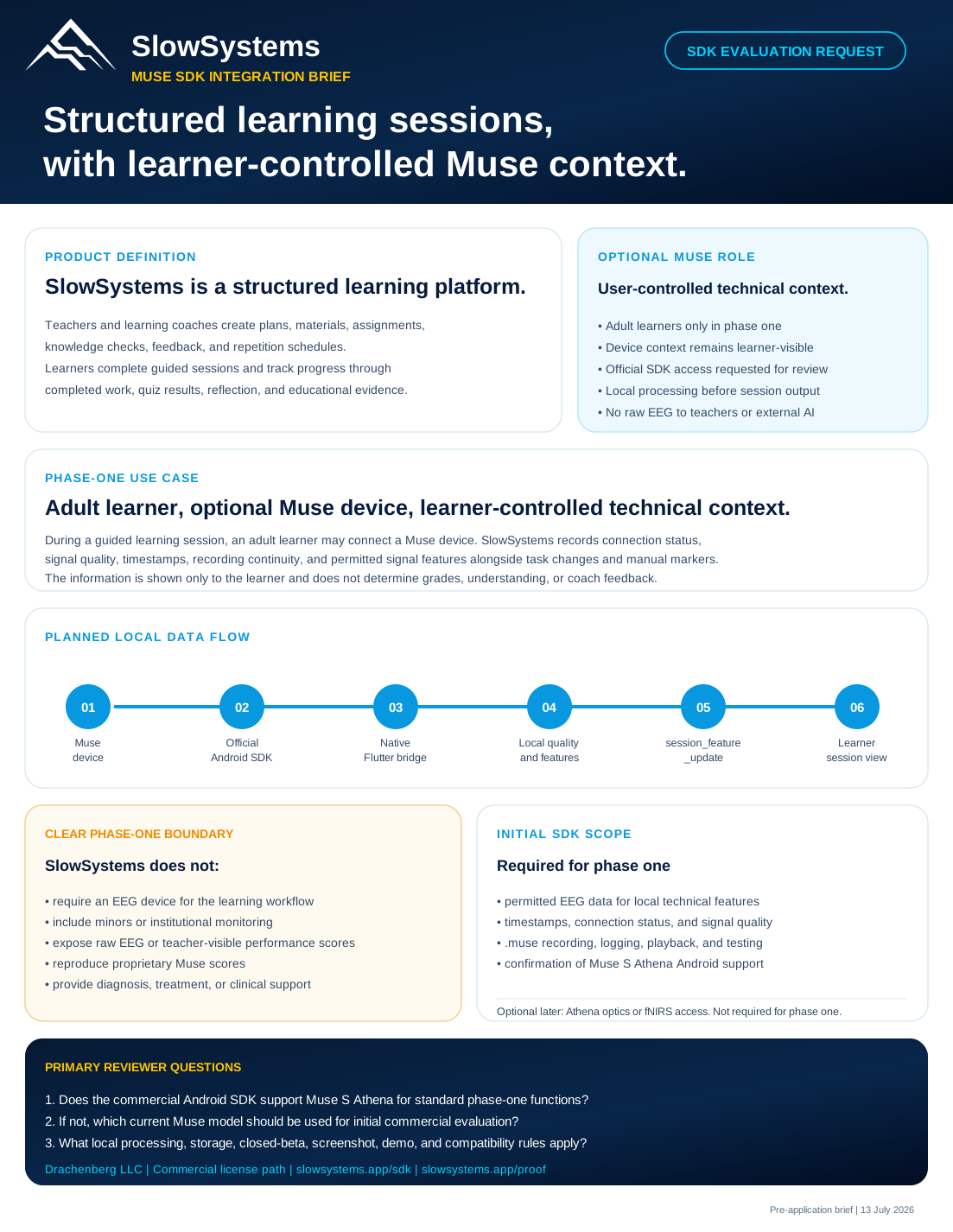
Reviewer one-page brief
This compact pre-application overview is intended for a Muse SDK reviewer. The PDF is suitable for internal forwarding and archiving; the SVG remains available as a responsive preview.
Product workflow
Educational progress comes from completed work and human-readable learning evidence—not from a sensor-derived mental-state score.
Learning goal, material, task, duration, and knowledge check.
Guided session with tasks, notes, pauses, and questions.
Quiz, recall, applied task, or completed work.
Self-assessment, confidence, difficulty, and session notes.
Coach feedback, follow-up task, and repetition schedule.
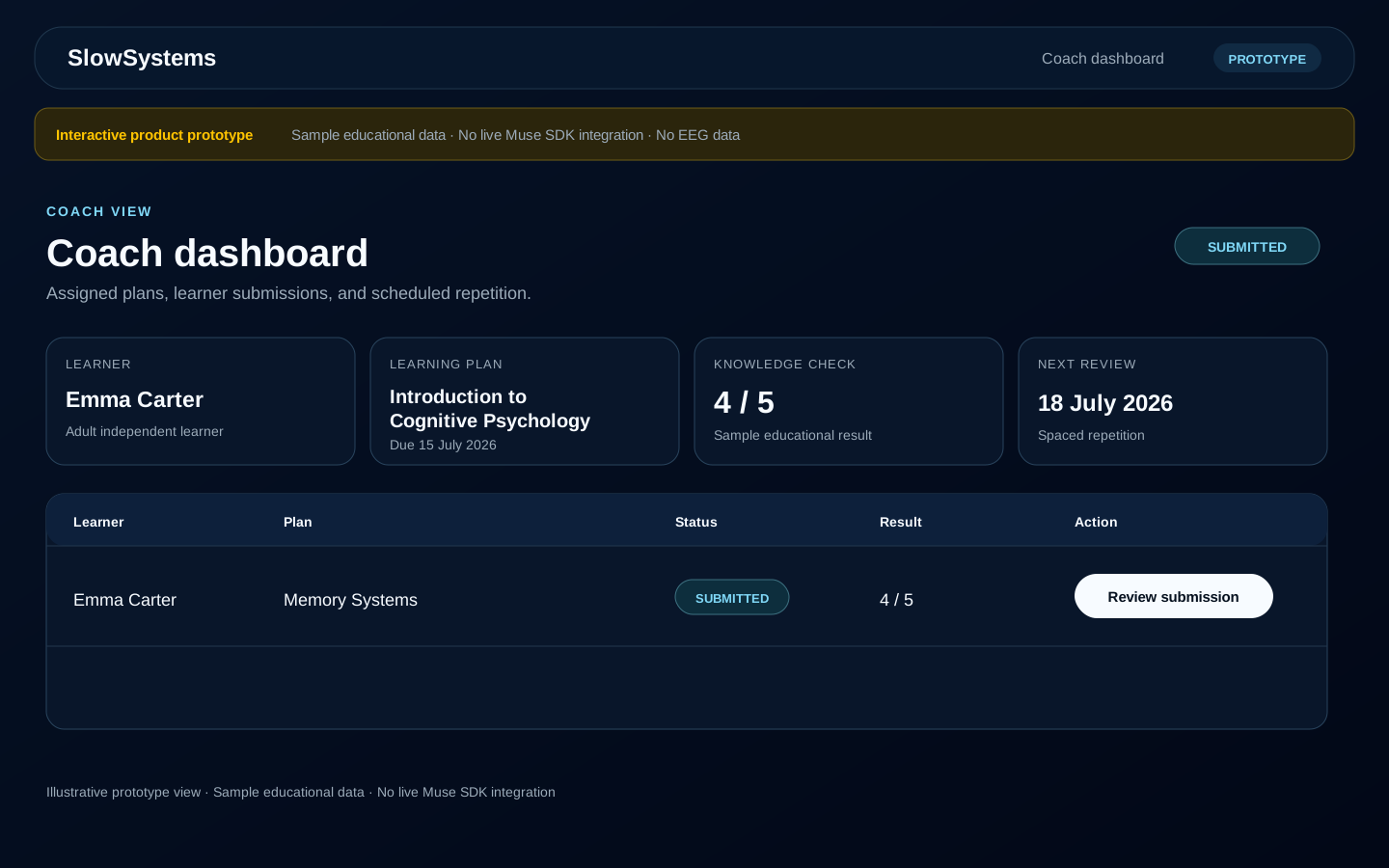
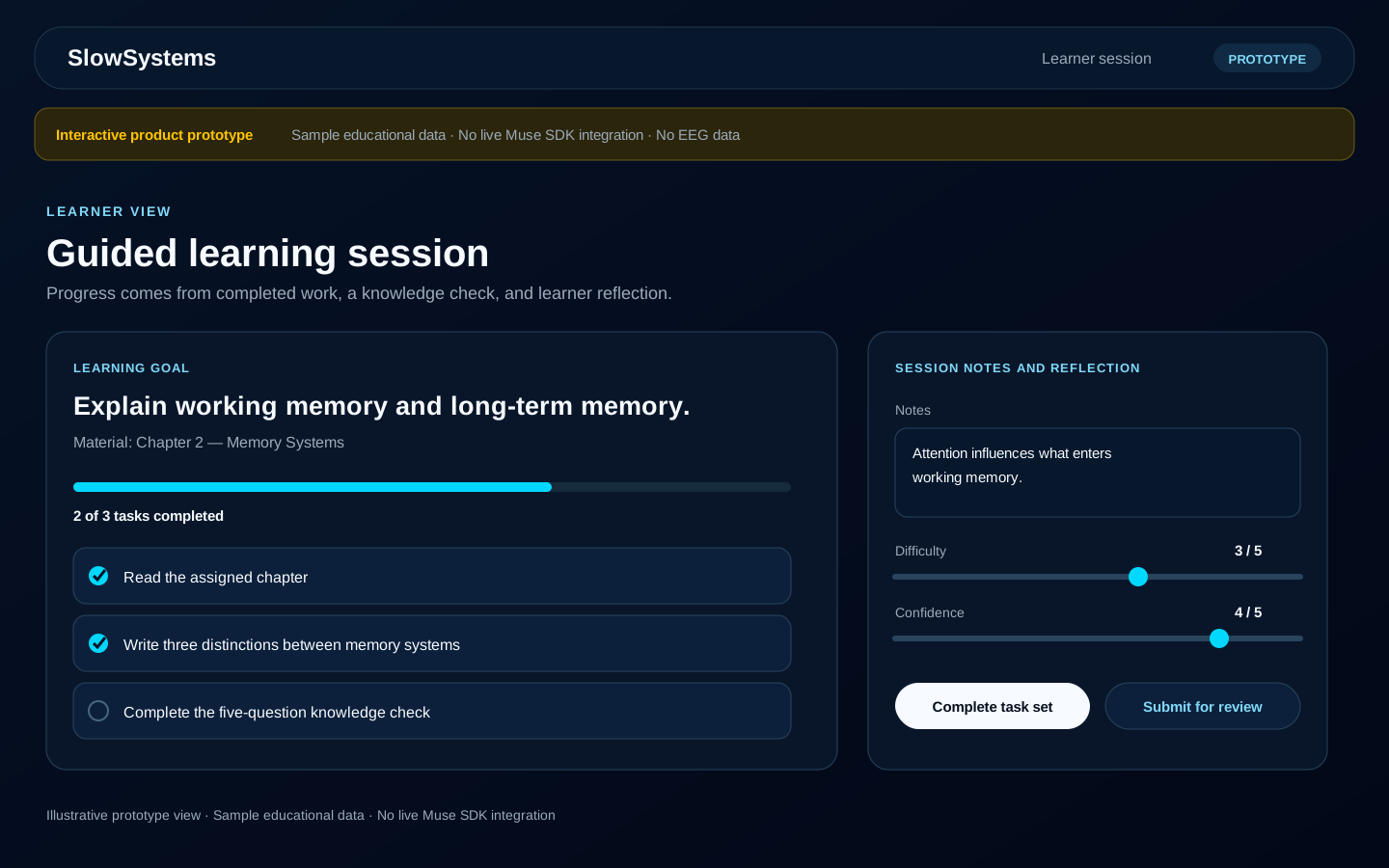
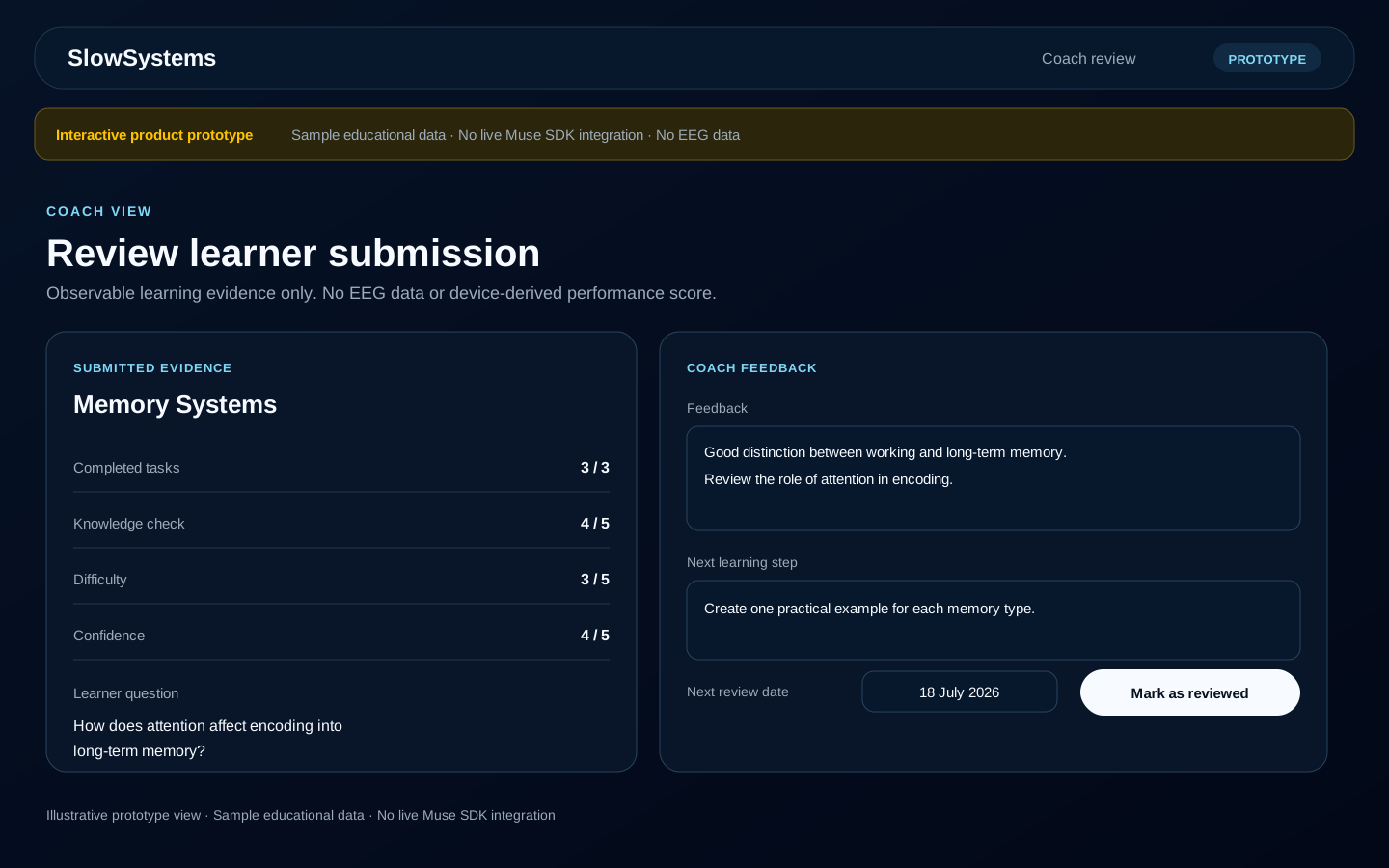
Interactive product prototype
The prototype uses sample educational data and demonstrates a coach dashboard, a guided learner session, a knowledge check, reflection, and coach review. It contains no live Muse SDK integration, Bluetooth connection, simulated EEG stream, concentration score, or mental-state inference.
Current implementation status
The following status is intentionally explicit so the prototype cannot be mistaken for an approved device integration.
| Area | Status | Evidence or boundary |
|---|---|---|
| Coach–learner workflow | Interactive prototype | Clickable sample-data workflow at /demo. |
| Learning plans | Prototype | Goal, material, task, duration, knowledge check, due date, and review date. |
| Guided sessions | Prototype | Tasks, notes, pauses, completion, and learner reflection. |
| Coach feedback | Prototype | Feedback, next task, and repetition date. |
| Muse SDK access | Pending | Commercial review requested. |
| Live Muse connection | Not implemented | No Bluetooth or live-device runtime is shown. |
| Muse S Athena compatibility | Not confirmed | Standard Android capability confirmation requested. |
| EEG processing | Not demonstrated | No simulated stream, chart, or mental-state score. |
| Athena optics / fNIRS | Optional later | Not required for phase 1. |
Why Muse is requested
Muse is requested for a narrow technical role. The device does not create the learning result and does not replace the educational workflow.
Permitted timestamps can align optional device context with task changes, pauses, and manual markers.
Connection status and available signal-quality information can help the learner identify unusable periods.
.muse recording, logging, and playback would support reproducible integration testing where permitted.
Approved data can be processed locally before a narrowly defined event shown only to the learner.
Phase-one use case
During a guided learning session, an adult learner may optionally connect a Muse device. The application would record approved connection status, signal quality, timestamps, recording continuity, and permitted signal features alongside task changes, pauses, and manual markers. The information would be shown only to the learner. It would not grade the learner, infer understanding, or determine coach feedback.
Minors, schools, and institutional student monitoring are outside the phase-one device scope.
Coaches receive educational records only, not raw EEG or EEG-derived performance scores.
The system does not claim to detect understanding, thoughts, intelligence, or objective concentration.
The system does not provide diagnosis, treatment, therapy, or clinical decision support.
Planned local data flow
Device access, local processing, educational records, and any future storage remain separate layers.
Optional device connected by an adult learner.
Commercial SDK path and supported-device confirmation required.
Planned adapter between the official SDK and the learning application.
Signal-quality checks and permitted feature extraction.
Technical context shown in the learner-controlled session view.
Disabled by default.
Educational records only; no raw EEG or EEG-derived performance scores.
No raw EEG.
User-controlled and separately documented before any closed beta.
Technical fixture
The draft event records session phase, technical signal quality, and documented signal features. It contains no mental-state label and explicitly disables learning-outcome inference.
{
  "event_type": "session_feature_update",
  "session": {
    "phase": "guided_learning",
    "educational_use": "technical_context_only"
  },
  "signal_quality": {
    "status": "usable"
  },
  "learning_outcome_inference": false,
  "claim_boundary": "non_medical"
}
Related files: sample-run-001.json · session-feature-update.schema.json · review-manifest.json
Requested SDK scope
Phase 1 requires confirmation of standard Muse S Athena support for Android. Athena optics or fNIRS-related access is optional and not required.
| Priority | Capability | Purpose |
|---|---|---|
| Required | Permitted EEG data | Local technical feature extraction during an optional adult learning session. |
| Required | Timestamps | Synchronize data with tasks, pauses, and manual markers. |
| Required | Connection status | Reliable session setup and interruption handling. |
| Required if available | Signal quality | Device-fit guidance and identification of unusable periods. |
| Development | .muse recording, logging, and playback | Repeatable integration testing. |
| Optional later | Athena optics / fNIRS | Separate feasibility evaluation; not a phase-one dependency. |
Reviewer confirmations
If Athena is not supported for the phase-one functions, SlowSystems asks Muse to identify the appropriate current model for initial commercial evaluation.
Does the commercial Android SDK support Muse S Athena for EEG data, timestamps, connection status, signal-quality information, .muse recording, playback, and logging?
If not, which current Muse model should be used for the initial commercial SDK evaluation?
What restrictions apply to local processing, storage, adult closed beta, device naming, screenshots, demo material, and public compatibility statements?
Are optics or fNIRS-related data available and permitted? Phase 1 does not depend on this access.
Available now
Requires approved access
Contact path
Education collaboration and SDK/device-integration inquiries are separated in the contact form.